


Jury's refusal to convict Dylan Evans is another blow to the criminalisation of Palestine solidarity
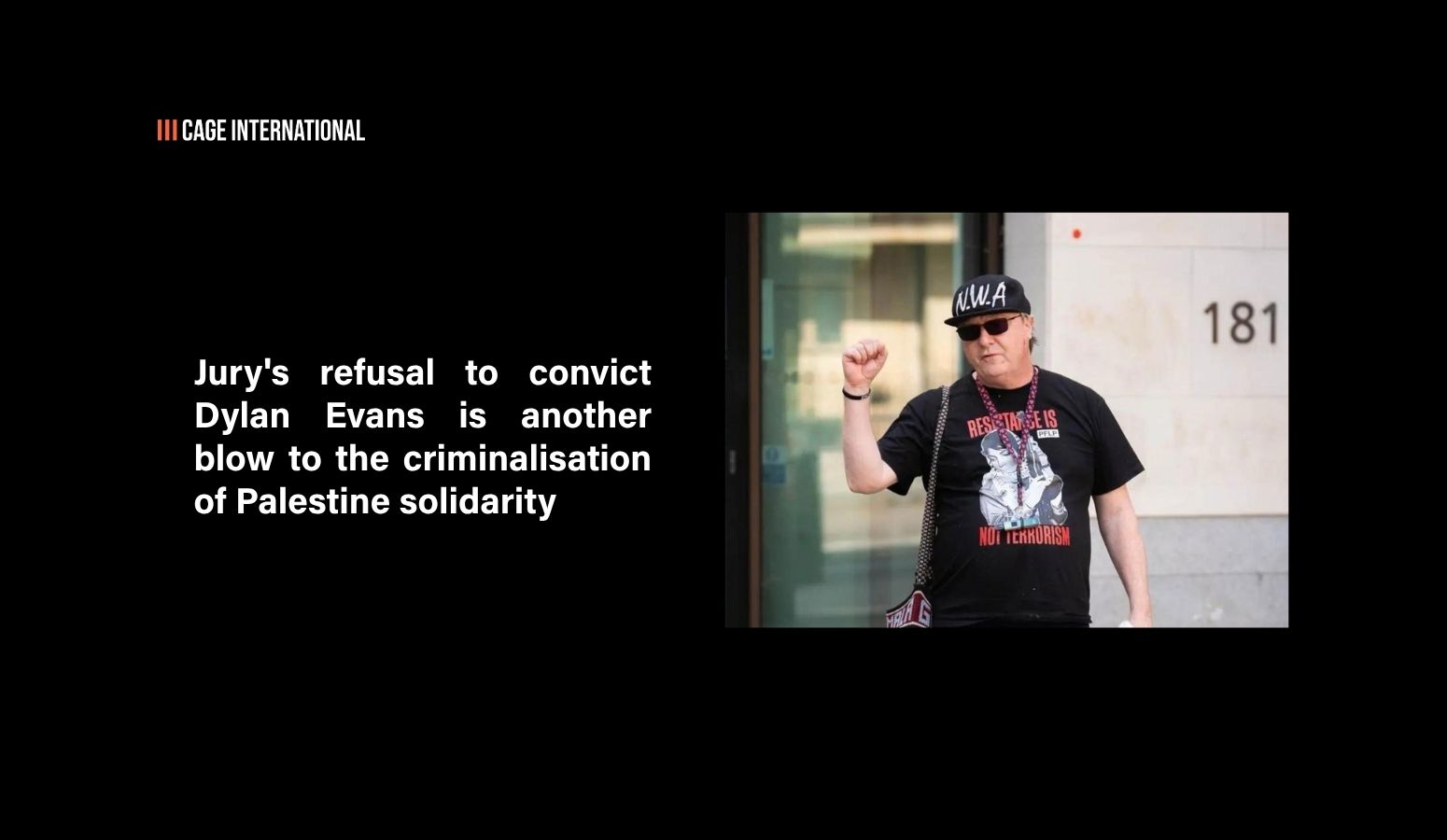

- On the 30th September 2026, a jury at Kingston Crown Court failed to reach a verdict in the trial of academic and writer Dylan Evans after a four-week trial.
- Evans faced one count under Section 12 of the Terrorism Act 2000, carrying up to 14 years in prison, and two counts under Section 19 of the Public Order Act 1986.
- In May 2024, more than a dozen officers raided his home. Counter-terrorism officers searched his flat and seized his devices, his podcast notes and every document written in Arabic.
- He spent more than two years on bail awaiting trial.The case arose from posts made in October 2023, which were flagged by the anonymous pro-Israel account.
London — Dylan Evans has successfully resisted a politicised prosecution over his pro-Palestine activism, after the jury in his trial was unable to reach a verdict. The prosecution had built its case on the claim that an academic's satire amounted to terrorism. Dylan Evans' case joins a growing list of Section 12 and Palestine-related prosecutions that have ended in acquittals or hung juries. Together, these cases point to the fact that when the public is asked to treat solidarity with Palestine as a crime, increasing numbers of them refuse.
Section 12 is an attack on freedom of speech and is being consistently abused to criminalise legitimate expressions of support for Palestinian resistance. The prosecution sought to present Dylan, a well-published academic specialising in Lacanian psychoanalysis, as a man consumed by murderous hatred of Jewish people. Dylan's grandfather was a Jewish RAF pilot who was shot down over Berlin by the Nazis and killed at the age of 25.
The continuing silence and lack of support of so called advocates and campaigners for free speech in relation to these cases is telling and deafening.
Anas Mustapha, Head of Public Advocacy at CAGE, said:
"To prosecute Dylan Evans, the state had to invent a man who does not exist, and yet was unable to convince a jury that he committed any offence. . This is how Section 12 criminalises speech and enables states to target dissent against its foreign policy decisions, especially its complicity in Genocide. Juries are increasingly refusing to convict on this basis."
Download Files


