


Bangladesh sentences student leader to death, acquits ministers of ruling party in same case
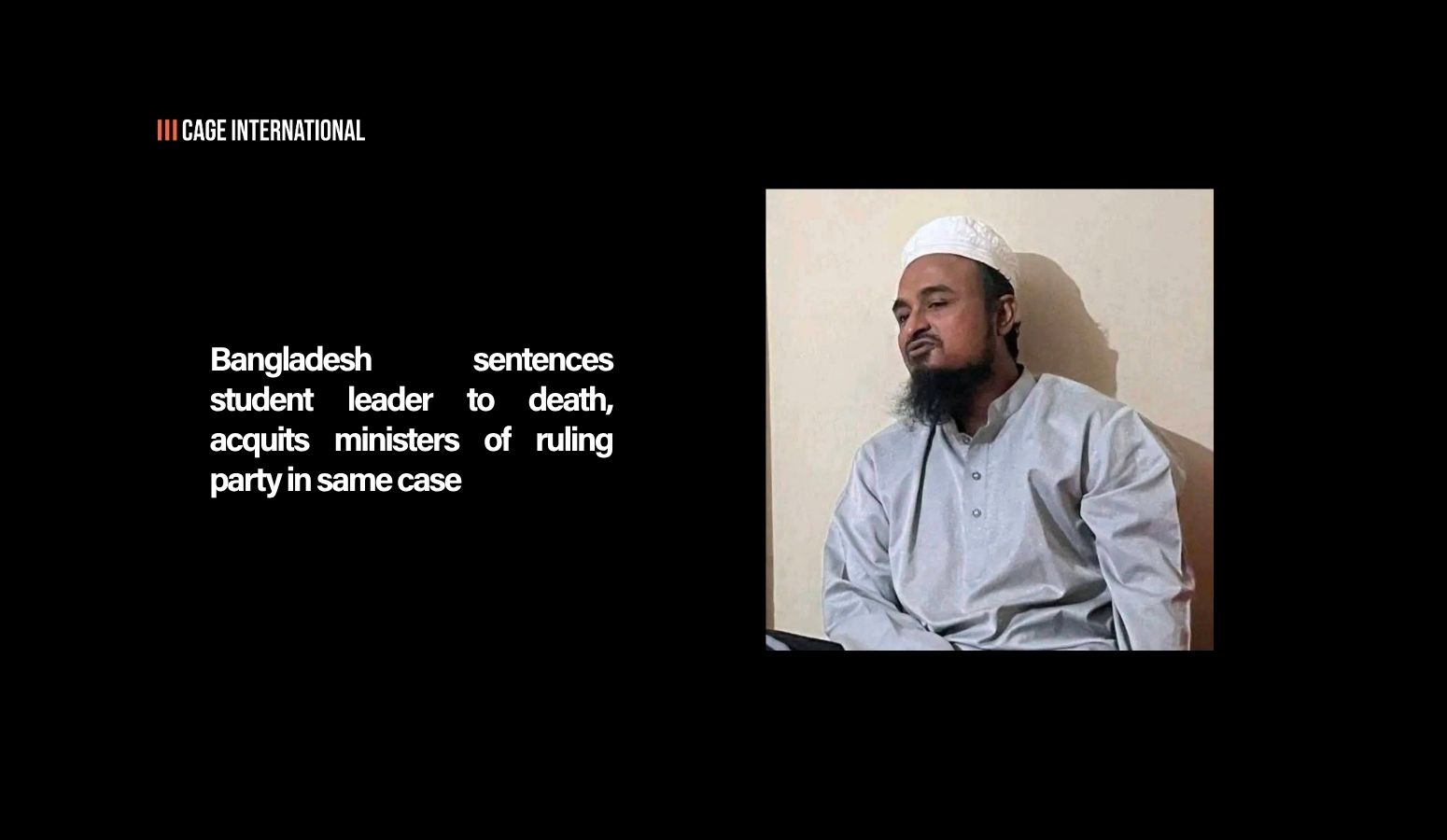

- Sylhet Speedy Trial Tribunal sentenced Hafiz Syed Naim Ahmad Arif to death and fined him Tk100,000 on 25 June 2026, over an alleged 2004 attempted murder of then-MP Suranjit Sengupta
- All 9 co-accused were acquitted in the same verdict, including sitting Expatriates' Welfare Minister Ariful Haque Chowdhury, sitting MP G. K. Gaus, and former state minister Lutfuzzaman Babar - all Bangladesh Nationalist Party
- Naim has been in continuous detention since September 2006, nearly 20 years, and the case itself has run for 22 years
- The conviction rests on a single confession statement taken during remand, which Naim's family says was extracted under torture - no eyewitness testimony was presented
- Naim was a local leader of Chhatra Jamiat, the student wing of Jamiat Ulama-e-Islam Bangladesh
- His family has announced an appeal to the High Court
Sylhet — A man has been sentenced to death on the word of a confession his family says was beaten out of him, while nine men charged in the same case walked free - three of them sitting members of Bangladesh's governing party.
Naim was 25 years old, a local Chhatra Jamiat leader in Sunamganj, when he was implicated in the 2004 attack on Awami League politician Suranjit Sengupta. Two decades of detention followed. Twenty-two years and a change of government later, the tribunal found insufficient evidence to convict a serving cabinet minister, a sitting MP, and a former state minister for home - but sufficient evidence, resting on a single disputed confession, to send Naim to execution.
A conviction based on a false confession is always the easiest weapon to use against a vulnerable individual with no political clout. Indeed, it is the signature of all oppressive regimes and the hallmark of an unjust and corrupt judiciary.
Naim's family maintain his confession was coerced during remand and that he had no connection to the attack. They have announced their intention to appeal to the High Court. The tribunal's verdict should not be allowed to stand unexamined.
Download Files


